
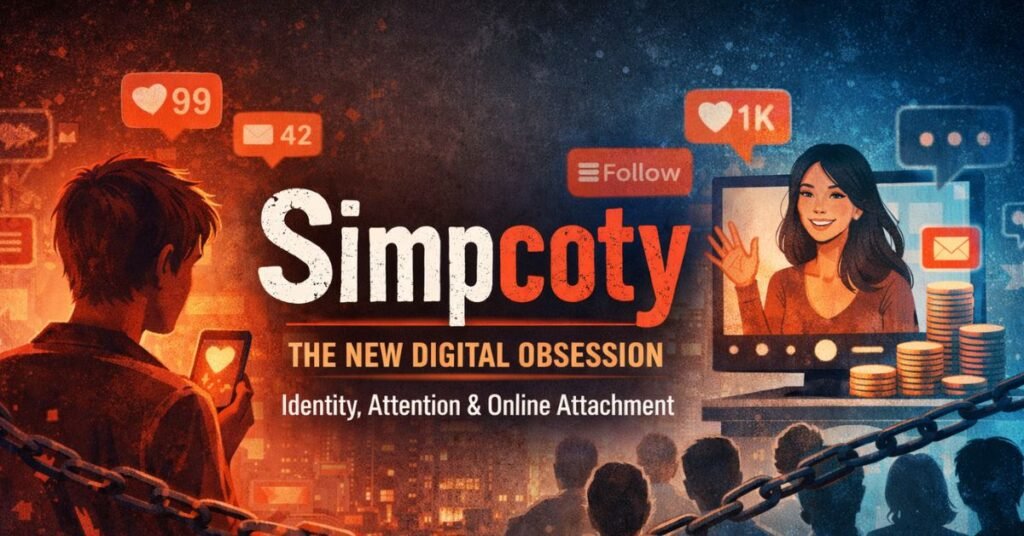
There’s a certain kind of silence that follows a post you regret.
You’ve shared too much. Or tried too hard. Or performed a version of yourself that felt slightly off — shinier, thirstier, louder. The likes trickle in. The comments land. But something feels hollow.
That feeling? That tension between authenticity and performance? That’s where simpcoty lives.
Simpcoty isn’t just a slang term or a fleeting hashtag. It’s a behavioral pattern. A digital posture. A subtle shift in how people seek validation, attachment, and recognition online — often without realizing it.
Over the past few years, I’ve watched this pattern repeat itself across platforms. In creators. In brands. In everyday users. And once you notice it, you can’t unsee it.
Let’s unpack what simpcoty really means — and why it matters more than most people think.
What Is Simpcoty?
At its core, simpcoty describes the tendency to overinvest emotionally, socially, or digitally in someone or something — often in exchange for attention, approval, or perceived closeness.
It’s not exactly “simping.” And it’s not exactly codependency.
It’s subtler.
Simpcoty shows up when:
- Someone curates their personality around a person they admire online.
- A follower engages obsessively with a creator’s every move.
- A brand reshapes its identity entirely to chase audience approval.
- A user performs exaggerated loyalty to gain visibility in a community.
The currency isn’t love. It’s attention.
And attention, in digital ecosystems, behaves like oxygen.
The Psychology Behind Simpcoty
Let’s zoom out for a moment.
Humans are wired for attachment. We seek belonging. We crave affirmation. Historically, this happened within small, physical communities.
Now? We do it through screens.
Simpcoty thrives because digital platforms amplify three psychological triggers:
1. Variable Reward Systems
Social media platforms operate on intermittent reinforcement. You never know when a comment, reply, or like will hit — and that unpredictability keeps you hooked.
When someone you admire responds? Dopamine spike.
The brain interprets that micro-interaction as meaningful closeness.
It’s not rational. It’s neurological.
2. Parasocial Intimacy
We feel deeply connected to people who don’t know us.
Creators share morning routines. Vulnerabilities. Breakups. Therapy journeys. We watch from our beds at 1 a.m., nodding like confidants.
Simpcoty develops when that one-sided connection begins shaping behavior.
You comment more. You defend them online. You adjust your opinions to align with theirs.
It feels like loyalty. But it’s attachment without reciprocity.
3. Identity Borrowing
Digital identity is fluid. You can reinvent yourself every week if you want.
Simpcoty often involves adopting traits, language, humor styles, or values from someone admired — not out of inspiration, but out of subconscious alignment seeking.
It’s less “I like their ideas” and more “If I become closer to this, I become more visible.”
That’s a subtle but powerful difference.
How Simpcoty Shows Up in Everyday Digital Life
This isn’t just influencer culture. It’s everywhere.
The Comment Section Devotee
We’ve all seen them.
The user who comments on every single post. Inside jokes. Defenses against critics. Emotional confessions. They’re part of the ecosystem — but orbiting tightly around one central figure.
It looks like enthusiasm.
Sometimes it is.
Sometimes it’s simpcoty.
The Algorithm Chaser
Creators are not immune.
I’ve worked with founders who reshaped their messaging entirely because one viral post performed well. Suddenly their tone shifts. Their opinions sharpen. Their personality narrows.
Not because they evolved — but because attention rewarded a specific version.
Simpcoty can become algorithmic self-abandonment.
The Brand That Begs
Watch corporate social media closely.
Some brands overperform relatability. They meme excessively. They mimic youth slang awkwardly. They latch onto trending creators with exaggerated praise.
Why?
Because proximity equals perceived relevance.
That’s institutional simpcoty.
And audiences can smell it.
Why Simpcoty Is Increasing
Digital culture has changed the rules of proximity.
You can now:
- Message celebrities.
- Comment directly under public figures.
- Join paid communities.
- Subscribe to exclusive content.
- Watch someone’s daily life unfold in real time.
Access creates illusion.
The illusion creates emotional investment.
And emotional investment — when not grounded — becomes simpcoty.
There’s also a loneliness factor. Studies consistently show rising feelings of social isolation despite hyperconnectivity.
When physical communities weaken, digital ones intensify.
Simpcoty fills relational gaps.
It gives structure to attachment.
But structure isn’t the same as substance.
The Cost of Simpcoty
Here’s where it gets uncomfortable.
Simpcoty can erode self-trust.
1. Identity Drift
When you consistently shape yourself around someone else’s approval, your internal compass weakens.
You start asking:
- “Will they like this?”
- “Does this align with what they think?”
- “Should I post this, or would it disrupt my perceived closeness?”
Small compromises accumulate.
Over time, authenticity thins out.
2. Emotional Overexposure
Simpcoty often involves oversharing to maintain visibility. Personal struggles. Vulnerabilities. Opinions designed to resonate with a specific audience.
There’s bravery in vulnerability.
There’s also risk.
When disclosure becomes currency, boundaries blur.
3. Power Imbalance
Simpcoty reinforces asymmetrical relationships.
One side holds influence. The other seeks acknowledgment.
Even if no harm is intended, imbalance shapes behavior.
That dynamic can distort self-worth.
Simpcoty vs. Healthy Admiration
Let’s be clear: admiration is not the enemy.
Inspiration fuels growth.
The difference lies in agency.
Healthy admiration:
- Inspires independent thinking.
- Encourages personal development.
- Maintains emotional boundaries.
- Doesn’t require constant validation.
Simpcoty:
- Seeks proximity over growth.
- Prioritizes visibility over authenticity.
- Over-invests emotionally.
- Reacts rather than chooses.
One expands identity.
The other orbits it.
How to Recognize Simpcoty in Yourself
This isn’t about shame. It’s about awareness.
Ask yourself:
- Do I change my tone or beliefs to match someone I follow?
- Do I feel disproportionate disappointment if they don’t respond?
- Do I spend excessive time engaging with their content hoping to be noticed?
- Do I measure my worth by their acknowledgment?
If the answer feels uncomfortably close to “yes,” pause.
Notice.
You don’t need to delete accounts or perform dramatic exits.
You need recalibration.
Actionable Strategies to Avoid Simpcoty
1. Diversify Your Digital Inputs
If one voice dominates your feed, your thinking narrows.
Follow contrasting perspectives. Different industries. Unrelated hobbies.
It rebalances emotional investment.
2. Audit Your Intent Before Posting
Ask:
- Am I sharing this because it’s true to me?
- Or because I want someone specific to see it?
Intent reveals alignment.
3. Build Offline Anchors
Nothing stabilizes digital behavior like real-world connection.
Face-to-face conversations recalibrate emotional scale. They remind you what reciprocal interaction feels like.
Simpcoty weakens when real intimacy strengthens.
4. Create Before You Consume
Heavy consumption increases attachment.
Creation restores agency.
Write. Design. Think. Build.
Your identity strengthens when you generate value rather than orbit it.
The Business Angle: Why Brands Must Understand Simpcoty
If you run a brand or personal platform, simpcoty isn’t just a cultural phenomenon. It’s strategic insight.
Audiences who display simpcoty behaviors are highly engaged — but also emotionally vulnerable.
Exploiting that dynamic may drive short-term metrics.
It erodes long-term trust.
Ethical brands:
- Avoid manufacturing artificial intimacy.
- Set boundaries with audiences.
- Encourage autonomy over dependency.
- Reward thoughtful engagement rather than obsessive visibility.
The future of digital leadership belongs to creators who empower, not entangle.
Simpcoty in the Age of Monetized Attention
Subscription models, exclusive communities, tiered access — they all intensify perceived closeness.
There’s nothing inherently wrong with monetization.
But when income depends on emotional loyalty, boundaries blur further.
Creators must ask:
- Am I cultivating community?
- Or dependency?
Followers must ask:
- Am I supporting someone’s work?
- Or outsourcing my emotional needs?
These are not cynical questions. They’re mature ones.
The Cultural Shift We’re Watching
Simpcoty is part of a broader evolution in digital sociology.
We are moving from information-based platforms to personality-based ecosystems.
Ideas used to travel first.
Now identities do.
When identity becomes product, attachment becomes strategy.
And when attachment becomes strategy, simpcoty multiplies.
The question isn’t whether this trend will disappear.
It won’t.
The question is whether we’ll navigate it consciously.
Reclaiming Digital Agency
The antidote to simpcoty isn’t detachment. It’s discernment.
Admire without surrendering.
Engage without over-investing.
Support without reshaping yourself.
Digital culture rewards intensity.
Wisdom prefers balance.
You don’t need to retreat from the internet to maintain integrity. You just need to remember that your value isn’t contingent on someone else’s acknowledgment.
Attention is powerful.
But autonomy is power.
A Final Thought
Late at night, scrolling through curated lives, it’s easy to mistake visibility for connection.
To believe that being seen by someone influential equals being significant.
It doesn’t.
Your depth doesn’t depend on their reply.
Your identity doesn’t require their validation.
Your voice doesn’t need proximity to matter.
Simpcoty thrives in silent self-doubt.
Clarity dissolves it.
And clarity begins with one quiet realization:
You are not here to orbit someone else’s gravity.
You are here to build your own.

Hannah Price is a dedicated news content creator with a sharp eye for accuracy, clarity, and relevance. She specializes in covering current events, global developments, and trending stories, delivering information in a clear, engaging, and trustworthy manner. With a background rooted in research-driven reporting, Hannah excels at turning fast-moving news into well-structured, reader-friendly content. Her work prioritizes credibility, context, and responsible journalism, helping audiences stay informed without unnecessary noise or bias.