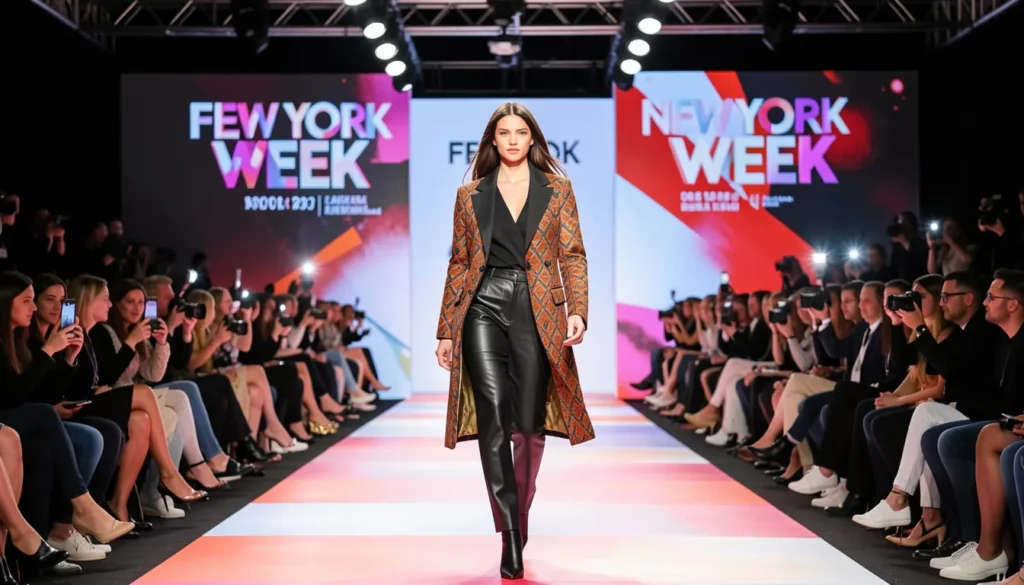
Every September and February, the global fashion spotlight shines brightly on the Big Apple. New York Fashion Week (NYFW) officially kicks off the international “fashion month,” setting a fast-paced, energetic tone for the season. It’s a whirlwind of runway shows, exclusive parties, and street-style spectacles, where top American designers and emerging talent unveil their latest collections. For industry insiders and fashion enthusiasts, it is a crucial barometer of what’s to come in the world of style.
This guide will serve as your all-access pass to NYFW. We will delve into its rich history, explore the key designers who define its identity, and explain what makes this event a cornerstone of the American fashion industry. From the iconic venues to the rise of the street-style scene, you’ll get a comprehensive look at how this event operates and why it matters.
What is New York Fashion Week?
New York Fashion Week is a semi-annual series of events where fashion designers display their upcoming collections to buyers, the press, and the general public. As the first stop in the “Big Four” fashion weeks—followed by London, Milan, and finally Paris—NYFW is known for its commercial viability, focus on American sportswear, and a dynamic, high-energy atmosphere that reflects the city itself.
The event is not held in a single location but is spread across various venues in Manhattan. The Council of Fashion Designers of America (CFDA) plays a significant role in creating the official schedule, ensuring a coordinated and impactful week of shows and presentations.
The Purpose of NYFW
At its core, NYFW is a trade event. Its primary functions are:
- For Designers: To showcase their upcoming collections to retail buyers who will place orders for their stores, and to the media who will generate press coverage.
- For Buyers: To see new collections firsthand and decide which pieces to stock for the next season, effectively setting the retail landscape.
- For the Media: To report on new trends, review collections, and broadcast the future of fashion to a global audience.
The History of New York Fashion Week
While Paris has long been considered the traditional home of high fashion, New York established its own fashion identity out of necessity. The origins of NYFW date back to World War II.
From “Press Week” to Global Phenomenon
In 1943, with the fashion industry unable to travel to Paris due to the war, a powerful fashion publicist named Eleanor Lambert saw an opportunity. She created “Press Week,” an event designed to showcase American designers to fashion journalists who had previously ignored them in favor of French couture.
The event was a massive success. It gave designers like Claire McCardell—a pioneer of American sportswear—a national platform. For the first time, American fashion was recognized for its own unique qualities: practicality, wearability, and a modern, clean aesthetic. This event laid the groundwork for what would eventually become New York Fashion Week.
The Bryant Park Era
For many years, shows were held in various locations, from designers’ lofts to hotels. This decentralized approach was often chaotic. In 1993, the CFDA centralized the main shows by creating a formal venue: a series of white tents erected in Bryant Park. This move professionalized the event, giving it a central hub and elevating its global status. The “Bryant Park era” is often remembered nostalgically as a golden age for NYFW, hosting iconic shows from designers like Calvin Klein, Donna Karan, and Marc Jacobs.
The Modern, Decentralized Era
After leaving Bryant Park, NYFW moved to Lincoln Center and later to various other locations. Today, the event has returned to a more decentralized model, with designers choosing unique venues across the city that best reflect their brand’s identity. Spring Studios in TriBeCa is a popular hub, but shows can be found anywhere from a Brooklyn warehouse to a historic Manhattan landmark.
The Defining Characteristics of NYFW
Each of the “Big Four” fashion capitals has its own distinct flavor. Here’s what sets New York apart.
Commercial Focus and Wearability
New York has always been the most commercially focused of the fashion weeks. American designers are masters at creating clothes that people not only admire on the runway but also want to wear in their daily lives. The emphasis is on ready-to-wear pieces that are stylish yet functional. This is where you see the evolution of sportswear, denim, and classic American staples.
Emerging Talent and the CFDA
NYFW is a crucial launching pad for new designers. The Council of Fashion Designers of America (CFDA) plays a vital role in nurturing this new talent. The CFDA/Vogue Fashion Fund, for example, is a prestigious award that provides mentorship and financial backing to promising designers, many of whom go on to become major players in the industry. Designers like Proenza Schouler and Alexander Wang gained early recognition through this program.
A Diverse and Inclusive Spirit
Reflecting the melting-pot culture of the city itself, NYFW has become a leader in promoting diversity on the runway. In recent years, there has been a significant push for more inclusivity in terms of race, size, age, and gender identity. Designers like Christian Siriano have been widely praised for consistently featuring models of all body types in their shows.
Key Designers and Brands to Watch
While the NYFW schedule is packed with hundreds of names, a few key designers consistently define the week.
The Titans of American Fashion
- Michael Kors: A master of polished, all-American glamour. His collections are known for their luxurious yet wearable pieces that exude confidence.
- Tory Burch: Embodies a preppy-bohemian aesthetic, offering everything from sophisticated workwear to chic vacation-ready pieces.
- Tom Ford: While he has shown in other cities, his return to NYFW is always a major event. Ford brings a dose of high-octane, unapologetic glamour and sex appeal to the schedule.
The Innovators and Trendsetters
- Marc Jacobs: Often serves as the unofficial finale of NYFW. His shows are known for their theatricality and artistic vision, always delivering a memorable and thought-provoking experience.
- Proenza Schouler: The design duo Jack McCollough and Lazaro Hernandez are celebrated for their modern, artistic approach to fashion, blending craftsmanship with a cool, downtown edge.
- Coach: Under the creative direction of Stuart Vevers, Coach has transformed from a leather goods company into a full-fledged fashion powerhouse, known for its youthful energy and American heritage-inspired collections.
The Spectacle Beyond the Runway
Much of the excitement of NYFW happens off the runway. The event has become a massive cultural moment, driven by media coverage and social media.
The Street Style Scene
The sidewalks outside the show venues have become a runway in their own right. Photographers from top publications gather to snap photos of fashion editors, models, influencers, and celebrities arriving at the shows. Street style has a powerful influence on trends, showcasing how runway pieces are interpreted and worn in the real world. It’s a vibrant display of personal style and creativity.
How to Get Involved (Even Without a Ticket)
Attending a major NYFW show is typically invite-only, reserved for industry professionals and VIPs. However, there are still ways for the public to participate in the excitement.
- Live-Streams: The vast majority of designers now live-stream their shows online through their websites or social media channels, allowing anyone to have a front-row seat from their couch.
- NYFW: The Talks: The CFDA and IMG often host a series of panel discussions with industry leaders that are open to the public.
- Public-Facing Events: Some brands and sponsors host open events, pop-up shops, or presentations that allow for public access.
Conclusion
New York Fashion Week is more than just clothes on a runway; it’s a powerful engine for the American fashion industry and a vibrant celebration of creativity. It’s where the business of fashion gets done, where new talent is discovered, and where the next big trends are born. From its practical origins during World War II to its current status as a global media spectacle, NYFW embodies the dynamic, resilient, and endlessly innovative spirit of New York City itself.
Frequently Asked Questions (FAQs)
Q1: When is New York Fashion Week?
A: NYFW takes place twice a year. The Fall/Winter collections are shown in February, and the Spring/Summer collections are shown in September.
Q2: Who organizes New York Fashion Week?
A: While there is no single organizer, the Council of Fashion Designers of America (CFDA) creates and manages the official schedule. IMG is another major producer of NYFW events.
Q3: Can anyone go to New York Fashion Week?
A: The official runway shows are private, invite-only events for industry professionals (press, buyers) and VIPs. However, many shows are live-streamed, and there are sometimes public events and talks that anyone can attend.
Q4: Where is NYFW held?
A: There is no longer one central location. Shows and presentations are held at various venues across Manhattan and other boroughs, chosen by the individual designers. Spring Studios is a common hub for many shows.
Q5: What is the difference between NYFW and Paris Fashion Week?
A: NYFW is known for its commercial focus, American sportswear, and emerging designers. Paris Fashion Week is the traditional home of high-fashion luxury houses and haute couture, often considered the most prestigious and artistic of the “Big Four.”

Sofia Bennett is a fashion content creator known for her refined perspective on style, trends, and modern elegance. She specializes in curating content that blends timeless fashion principles with contemporary aesthetics, helping readers develop confidence through personal style. Sofia’s work spans outfit styling, wardrobe essentials, and fashion inspiration, always with an emphasis on authenticity and practicality. Her approachable voice and eye for detail make fashion accessible, empowering readers to express themselves with confidence and sophistication.