
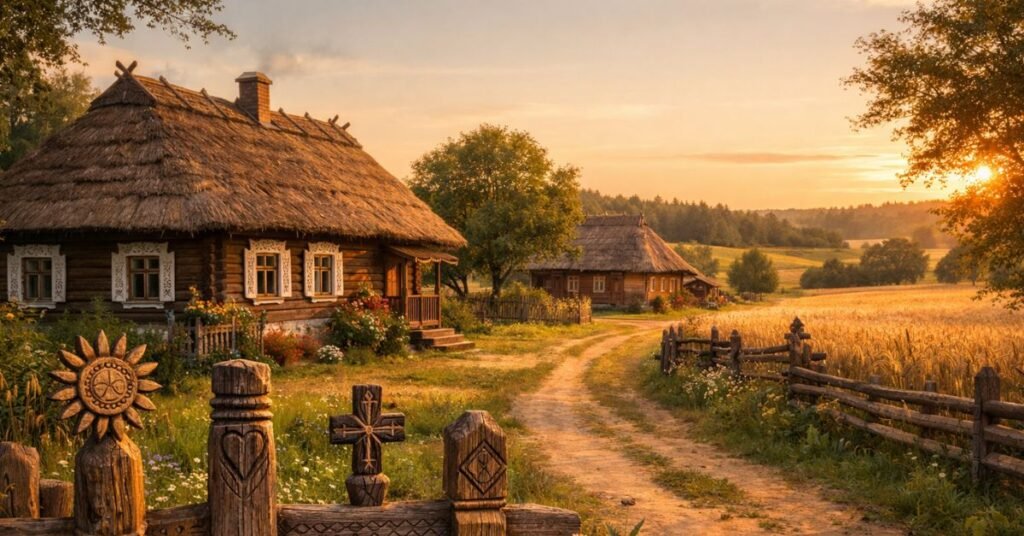
The Lithuanian word “sodziu” (or “sodžius” in its nominative form) represents far more than a simple translation of “village.” It embodies centuries of cultural identity, agricultural tradition, and the deep connection between Lithuanian people and their rural homeland. Whether you’re researching Lithuanian heritage, planning a cultural journey, or exploring linguistic depth, this comprehensive guide covers everything you need to know about sodziu.
What Does Sodziu Mean? Understanding the Core Concept
At its linguistic foundation, sodžius translates to “village” or “rural homestead” in Lithuanian. However, this simple definition barely scratches the surface of its cultural significance.
The word derives from the Proto-Baltic root “sad-,” meaning “garden” or “cultivated space.” This etymological foundation reveals how early Baltic peoples viewed these settlements as carefully tended environments rather than random clusters of homes.
In practice, sodziu refers to traditional Lithuanian rural communities typically featuring small clusters of farmsteads, family-run estates, and agricultural lands. These settlements are distinguished by close-knit communities, deep agricultural traditions, and intimate connections to the land.
The Multiple Meanings of Sodziu
The term appears in Lithuanian conversation with various contextual meanings:
As a physical place: Sodziu describes traditional rural villages with wooden cottages, orchards, grain fields, and families who have worked the same soil for generations.
As a cultural concept: It represents Lithuanian identity, folklore traditions, communal values, and the spiritual connection between people and nature.
As a conversational expression: In colloquial speech, “sodžiu” (instrumental case) can mean “in a word” or “to sum it up,” serving as a verbal punctuation mark that encapsulates thoughts and feelings.
The Historical Roots of Sodziu
Ancient Origins and Development
The history of sodziu stretches back to Lithuania’s early rural settlements, particularly between the 12th and 16th centuries. These villages emerged naturally as Baltic tribes transitioned from nomadic lifestyles to permanent agricultural communities.
Unlike planned towns, sodziu settlements grew organically. Homes scattered irregularly across the landscape to suit terrain and farming needs, typically forming communities of 15-30 households. Each household maintained its own garden plot, livestock area, and connection to surrounding farmland.
Cultural Preservation Through Adversity
The sodziu became the primary vessel for preserving Lithuanian language, customs, and national identity, especially during periods of foreign occupation when cities were more influenced by external powers. Pagan traditions subtly woven into Christian practices survived in these rural communities, creating a unique cultural tapestry.
During Soviet rule and various historical challenges, sodziu villages maintained traditions that might otherwise have been lost. They functioned as living museums of folk customs, agricultural practices, and cultural celebrations.
Sodziu Architecture: Where Function Meets Beauty
Traditional Wooden Construction
The visual charm of a sodziu lies in its distinctive wooden architecture. Traditional sodziu homes feature:
- Local timber construction: Built from locally sourced wood with detailed carvings showcasing skilled craftsmanship
- Steep roofs: Designed to withstand heavy winter snow and channel summer rains
- Thatched or wooden roofing: Traditional materials that provide excellent insulation
- Ornamental details: Hand-carved window frames, decorative eaves, and wooden gates
Functional Homestead Layout
Each sodziu homestead typically includes multiple structures arranged for both practicality and community:
- Living quarters for the extended family
- Storage barns for grain and hay
- Livestock shelters for animals
- Gardens for vegetables and herbs
- Outdoor summer kitchens
- Traditional saunas (pirtis)
- Shrines or crosses marking the property
The layout centers around communal spaces such as village squares and shared work areas, fostering the strong sense of community that defines sodziu life.
Daily Life and Traditions in the Sodziu
The Rhythm of Rural Living
Life in a sodziu village revolves around nature’s cycles and agricultural seasons. Days begin early, typically at dawn, and involve:
- Tending livestock and poultry
- Working gardens and fields
- Preserving seasonal foods
- Maintaining traditional crafts
- Gathering for communal labor during harvest
Community Values and Social Structure
Sodziu communities emphasize cooperation, respect for elders, and the preservation of ancestral traditions. Extended families often live in close proximity, maintaining strong social bonds and shared responsibilities.
In the sodziu worldview, neighbors function as extended family. Community members assist each other during critical farming periods, celebrate together during festivals, and support one another through difficulties.
Traditional Festivals and Celebrations
Sodziu life is marked by deeply spiritual and joyful festivals, often linked to agricultural milestones or pagan-Christian hybrid traditions:
Joninės (Midsummer): Celebrated around the summer solstice with bonfires, flower wreaths, and traditional songs. Communities gather to honor the longest day of the year.
Užgavėnės (Shrovetide): Features elaborate parades with handcrafted masks and costumes, marking the transition from winter to spring. Festivities can last for days.
Kupolė: Summer festivals with bonfire ceremonies celebrating nature’s abundance.
Vėlinės: Autumn remembrance festivals where families honor ancestors through shared meals and storytelling.
Kūčios (Christmas Eve): Traditional celebrations featuring specific foods and rituals passed down through generations.
Recent cultural surveys indicate that over 85% of active sodziu communities still observe these traditional holiday cycles, demonstrating their continued vitality.
Sodziu Cuisine: Farm-to-Table Tradition
Lithuanian cuisine owes much to the sodziu, where farm-to-table isn’t a trend but a centuries-old way of life. Most meals are sourced from personal gardens, small farms, or foraging.
Traditional Foods and Preparations
Common sodziu foods include:
- Bread: Baked in traditional wood-fired ovens, often rye-based
- Dairy products: Fresh milk, artisanal cheeses, and cultured dairy
- Root vegetables: Potatoes, beets, turnips, and carrots
- Preserved foods: Pickled vegetables, smoked meats, dried mushrooms
- Wild foods: Berries, mushrooms, and herbs gathered from forests
- Honey: From traditional beekeeping practices
Agricultural Knowledge and Practices
Farming in the sodziu isn’t merely work—it’s a way of honoring the land and ensuring survival. Traditional knowledge includes:
- Seasonal planting cycles aligned with natural rhythms
- Organic farming methods passed down through generations
- Animal husbandry techniques suited to local conditions
- Herbal medicine using plants grown in home gardens
- Food preservation methods for surviving long winters
The Language of Sodziu: Grammatical Forms
Understanding how sodziu functions in Lithuanian grammar reveals its deep integration into the culture:
- Sodžius (nominative): The standard form – “Here is a beautiful village”
- Sodžiaus (genitive): Shows possession or origin – “From the village” or “of the village”
- Sodžiuje (locative): Means “in the village” – where life happens, evoking the contained world of the sodziu
- Sodžių (plural genitive): Multiple villages
- Sodžiai (plural nominative): Villages as subjects
These grammatical variations appear frequently in Lithuanian literature, folk songs (dainos), and everyday conversation, demonstrating the word’s continued relevance in modern Lithuanian life.
Sodziu in Lithuanian Folklore and Arts
The Role in Folk Songs (Dainos)
The sodziu isn’t merely a setting in Lithuanian folklore—it’s often the protagonist. Countless folk songs describe life, love, loss, and labor within the sodžiuje. They sing of:
- Planting and harvesting rhythms
- Young people meeting at village gates
- The melancholy of leaving for cities or foreign lands
- Deep yearning to return home
- Connections between generations
Literary and Artistic Representations
From 19th-century writers like Žemaitė depicting rural life to modern novelists and poets, the sodžius serves as a central, evocative setting and symbol. It represents authenticity, tradition, the complexities of community, and often contrasts with urban life or displacement.
Poets like Maironis evoke village chapel bells tolling at dawn, symbolizing spiritual anchoring and national unity. Contemporary visual artists recreate sodziu landscapes in bold watercolors, capturing the interplay of shadow and sunlight on haystacks and golden fields.
Modern Sodziu: Preservation and Adaptation
Contemporary Relevance
While many young Lithuanians now migrate to Vilnius or Kaunas for education and employment, the appeal of sodziu hasn’t vanished. Instead, it has evolved:
Weekend Retreats: Former sodžiai are renovated into cozy guesthouses where city-dwellers reconnect with rural heritage.
Eco-Tourism: Ventures offer horseback rides through sunflower fields, traditional craft workshops, and authentic village experiences.
Artisanal Products: Agricultural entrepreneurs market local honey, cheeses, and herbal products under labels evoking sodziu authenticity.
Cultural Education: School programs bring urban children to working farms, teaching them to sow flax and spin linen as villagers have done for centuries.
Preservation Initiatives
Recognizing the cultural value of sodziu, nonprofits and governmental bodies have launched preservation efforts:
- Grants funding restoration of thatched roofs and timber walls
- Ethnographic documentation of dialects and cooking techniques specific to each region
- Cultural festivals celebrating traditional crafts and agricultural practices
- Academic research preserving knowledge of traditional farming methods
The Emotional and Psychological Significance
Sodziu and Lithuanian Identity
Ask any Lithuanian to describe sodziu and you’ll hear heartfelt recollections: childhood summers picking strawberries, evenings listening to crickets by candlelight, the scent of summer rain on freshly turned earth. These sensory memories form an emotional bond so strong that even Lithuanians abroad speak of sodziu with wistful reverence.
The word becomes a gateway to identity, offering comfort and a sense of belonging no matter how far one roams. It represents continuity—the passing of flame from one generation to the next, the unbroken link between land and community.
Regional Variations
Lithuania’s different regions feature distinct sodziu characteristics:
Aukštaitija: Known for rich folk heritage and well-preserved traditional architecture Dzūkija: Features unique forest-influenced traditions and customs Samogitia (Žemaitija): Maintains distinctive dialects and agricultural practices Suvalkija: Showcases particular building styles and craft traditions
Documentation projects capture these unique characteristics, ensuring that sodziu remains a living tradition rather than a museum piece.
Sodziu vs. Kaimas: Understanding the Distinction
You might encounter another Lithuanian word for settlement: kaimas. While often used interchangeably today, historical nuances existed:
Sodžius: Emphasized the organic unity of a relatively small, tightly-knit cluster of homesteads and their cultivated lands, functioning as a single socio-economic unit. Think communal organism.
Kaimas: Could sometimes denote a larger settlement, potentially less unified, or simply be a more general administrative term.
In contemporary usage, especially in cultural and emotional contexts, sodziu overwhelmingly carries the deeper connotations of heritage, community, and agrarian soul.
The Global Context: Sodziu and Sustainable Living
In today’s fast-paced, urbanized world, sodziu is often romanticized as a place of peace where time slows down and life is free from the chaos of cities. This vision, while not always practical (as rural life is genuinely challenging), shows how powerful the concept has become as a symbol of:
- Escape from modern stress
- Authentic living
- Sustainable agricultural practices
- Community-centered values
- Connection with nature
The sodziu model offers insights into sustainable living practices that resonate with contemporary movements toward eco-living, slow food, and intentional communities. Similar concepts exist globally, such as Japan’s Satoyama (traditional rural landscapes), though the specific cultural weight of sodziu is uniquely Lithuanian.
Frequently Asked Questions About Sodziu
What does the word “sodziu” actually mean?
Sodžius (nominative form) translates to “village” or “rural homestead” in Lithuanian, derived from the Proto-Baltic root “sad-” meaning “garden” or “cultivated space.” It represents both a physical place and a cultural concept embodying Lithuanian rural heritage, community values, and agricultural traditions.
Is sodziu a place, a food, or a company?
Sodziu is primarily a Lithuanian word for traditional rural villages and the lifestyle associated with them. It is not a specific food dish or company name, though the term may be used by businesses to evoke authenticity and heritage. Any confusion stems from SEO content rather than actual Lithuanian usage.
How do you pronounce sodziu?
The correct pronunciation is approximately “zoh-DZOO” (with the stress on the second syllable). The Lithuanian “dž” combination produces a sound similar to the “j” in “judge.”
Where can I experience authentic sodziu life?
Many regions in Lithuania offer eco-tourism experiences in restored sodžiai, particularly in Aukštaitija, Dzūkija, and Samogitia. These provide opportunities to experience traditional architecture, cuisine, and customs while supporting preservation efforts.
Can sodziu principles be applied to modern business or branding?
Absolutely. The sodziu values of authenticity, community, sustainability, and connection to heritage resonate strongly in modern branding, particularly for businesses emphasizing local production, traditional methods, or environmental responsibility.
What role does sodziu play in Lithuanian national identity?
Sodziu is central to Lithuanian cultural identity, representing the preservation of language, traditions, and values through periods of foreign occupation. It symbolizes the authentic Lithuanian spirit and continues to shape how Lithuanians understand themselves and their connection to homeland.
Conclusion: The Enduring Legacy of Sodziu
In a rapidly changing world, the word sodziu stands as a testament to continuity and cultural resilience. These traditional Lithuanian villages are more than charming homes and hearty cuisine—they represent a way of life that respects the earth, values human spirit, and remembers the past.
Whether you’re Lithuanian by blood, passion, or wanderlust, the sodziu invites you to slow down, connect, and live more meaningfully. As urban lives grow louder and faster, the whisper of the sodziu becomes more precious, reminding us who we are and who we could be.
The spirit of sodziu continues to thrive in modern Lithuania, bridging generations and connecting past wisdom with contemporary life. By understanding and appreciating sodziu, we gain insight into a living piece of Baltic history and a model for sustainable, community-centered living that our world still needs.
This guide provides comprehensive coverage of sodziu’s linguistic, cultural, historical, and contemporary significance, establishing a definitive resource for anyone seeking to understand this cornerstone of Lithuanian heritage.

Hannah Price is a dedicated news content creator with a sharp eye for accuracy, clarity, and relevance. She specializes in covering current events, global developments, and trending stories, delivering information in a clear, engaging, and trustworthy manner. With a background rooted in research-driven reporting, Hannah excels at turning fast-moving news into well-structured, reader-friendly content. Her work prioritizes credibility, context, and responsible journalism, helping audiences stay informed without unnecessary noise or bias.





Hey everyone, I stumbled upon hello88circle the other day! Pretty cool vibe, decent selection. I’m always on the hunt for new spots to try my luck. The registration process was smooth too. Give it a whirl and let me know what you think! Check it out: hello88circle
vz99bet, huh? Never heard of it. Sounds interesting, though. Thoughts on vz99bet? Gimme your honest reviews!
I’m not sure how to explain this name so I’m not going to even try! bum555. There are a few good bonuses at the moment! Check them out. bum555