
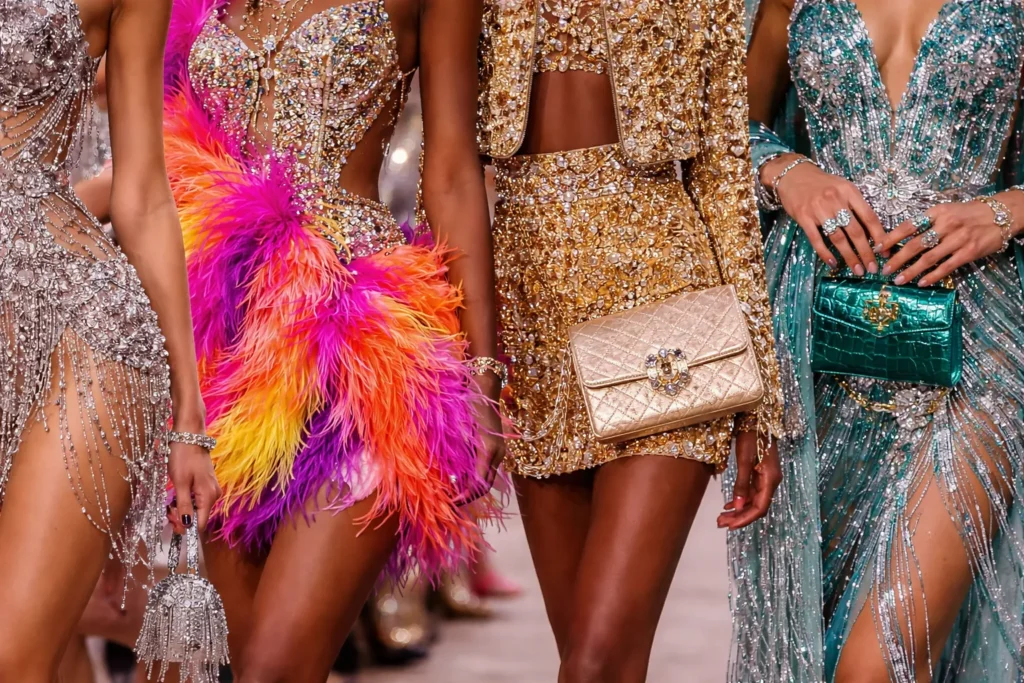
Fashion show outfits are more than just spectacular clothing on a catwalk; they are the beating heart of the style industry, a concentrated vision of a designer’s imagination, and the primary source of trends that will trickle down to our wardrobes. But for many, the connection between those avant-garde runway looks and what we wear on the street feels distant, even mystifying. This comprehensive guide is designed to bridge that gap. We will decode the purpose of fashion show outfits, teach you how to interpret their key elements, and, most importantly, provide a practical blueprint for adapting these high-concept styles into wearable, personal, and stunning everyday ensembles. Whether you’re a fashion enthusiast or simply looking to refresh your style, understanding fashion show outfits is your key to a more inspired and intentional wardrobe.
The Purpose and Language of the Runway
Before we can wear it, we must understand it. A fashion show is not merely a display of clothes; it’s a narrative, an art installation, and a strategic business presentation all in one.
Storytelling and Artistic Expression
At its core, a runway show is a designer’s unfiltered creative manifesto. The outfits on the catwalk are pieces of a larger story. Designers use fabric, silhouette, color, and styling to convey a theme—be it a nostalgic past, a dystopian future, a celebration of a specific culture, or a pure exploration of form. An outfit might be exaggerated to make a point about volume, or deconstructed to challenge traditional notions of tailoring. This is where fashion meets art, and the outfits are the primary medium.
Trend Forecasting and Industry Direction
While the most extreme looks grab headlines, the collective presentation of a season’s shows reveals the key trends that will define the coming years. Industry professionals—buyers, editors, and stylists—attend not to buy the exact outfits but to identify recurring elements: Is yellow the dominant color? Are shoulders sharply defined? Is there a focus on sustainable textiles? These distilled takeaways become the trend reports that influence everything from high-street collections to home decor.
Generating Buzz and Brand Identity
In today’s media-saturated world, a fashion show is a brand’s mega-event. An unforgettable runway outfit has the power to break the internet, generate millions in media value, and cement a designer’s aesthetic in the public consciousness. It’s about creating desire and a distinctive visual language that consumers will associate with the brand, even if they purchase a much simpler, accessible piece from the same collection.
Deconstructing a Fashion Show Outfit: Key Elements to Analyze
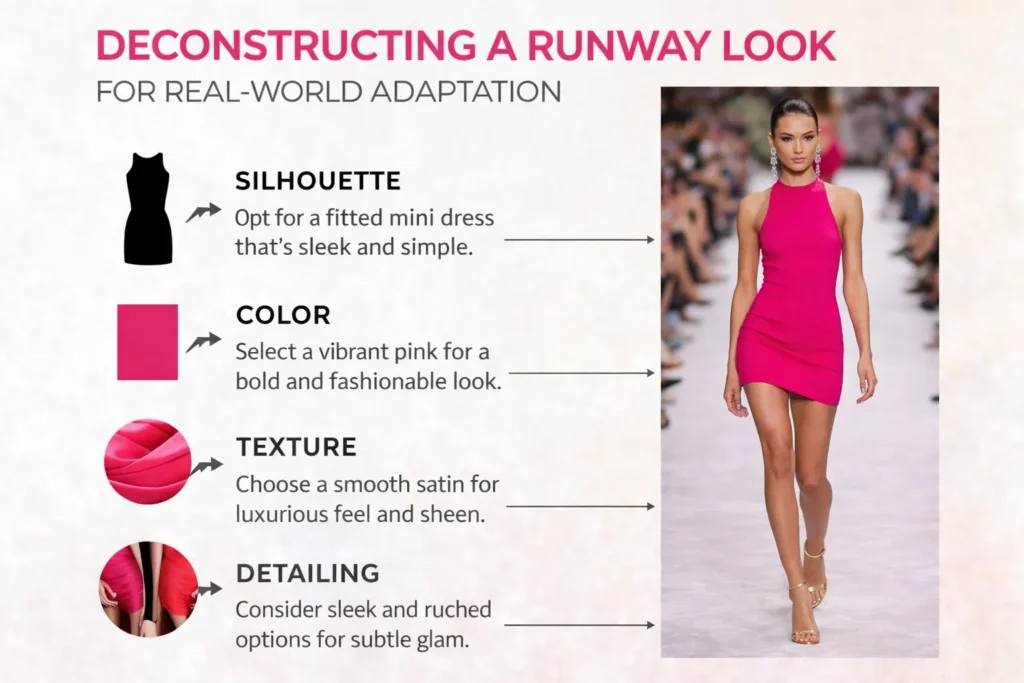
To translate runway magic to real life, you need to become a savvy deconstructionist. Look beyond the “wow” factor and break down each outfit into its core components.
Silhouette: The Foundation of Style
The silhouette is the overall shape an outfit creates on the body. It’s the first and most powerful impression.
- A-Line & Trapezoid: Flaring from the shoulders or waist, often creating a feminine, elegant shape.
- Columnar & Sheath: Straight up-and-down, emphasizing verticality and a sleek, modern feel.
- Oversized & Exaggerated: Playing with volume, often in shoulders, sleeves, or pant legs, for a dramatic, powerful statement.
- Fitted & Cinched: Highlighting the natural waist or body contours for an hourglass effect.
Runway Takeaway: Don’t copy the exact proportion, but identify the direction. Is the season leaning toward fluidity or structure? You can adapt this by choosing a blazer with a slightly stronger shoulder or a dress with a gentle A-line flare.
Color and Print: The Emotional Core
The palette of a collection sets its mood. Designer runway outfits use color strategically.
- Monochromatic Looks: A masterclass in texture and tone, creating sophistication and impact.
- Clashing Prints: A bold choice that signals creativity and confidence on the runway.
- Neutrals with a “Pop”: A timeless base punctuated by one vibrant, unexpected hue.
Runway Takeaway: Note the season’s key colors. You don’t need a head-to-toe neon green suit. Incorporate that pop color through a bag, shoes, or a single statement piece like a skirt.
Texture and Fabric: The Tactile Experience
This is what gives an outfit depth and luxury. Runways showcase innovative materials.
- Mix of Textures: Shiny patent leather against soft knitwear, crisp taffeta with delicate lace.
- Innovative Materials: Recycled plastics, vegan leathers, high-tech performance fabrics woven into high fashion.
- Traditional Fabrics Reimagined: Denim treated like evening wear, wool felted into sculptural forms.
Runway Takeaway: Embrace texture mixing in your own wardrobe. Pair a silky slip dress with a chunky, nubby cardigan. Combine sleek leather pants with a fuzzy mohair sweater. It instantly elevates an outfit.
Detailing and Embellishment: The Devil’s in the Details
This is where craftsmanship shines. Details can be subtle or overt.
- Hardware: Distinctive buttons, zipper treatments, buckle shapes.
- Embellishment: Beading, sequins, embroidery, applied crystals.
- Construction Details: Unusual seam placement, raw edges, draping, pleating, and ruffles.
Runway Takeaway: Focus on one detailed piece. Let a shirt with extraordinary cuffs or a pair of pants with unique pocket detailing be the star of your simpler outfit.
Styling: The Complete Picture
No catwalk outfit exists in a vacuum. Styling is the glue.
- Shoes & Boots: Often sets the tone—chunky soles for utility, delicate straps for romance.
- Bags & Accessories: Mini bags, oversized totes, statement jewelry. These are frequently the most directly adaptable items.
- Hair & Makeup: Completes the narrative. A bold lip, slicked-back hair, or avant-garde beauty looks contribute to the overall vibe.
Runway Takeaway: Styling is the easiest element to adopt. Try the season’s prevalent bag shape or experiment with the dominant makeup trend, like a bold red lip or clean, graphic eyeliner.
The Art of Adaptation: How to Wear Runway Trends in Real Life
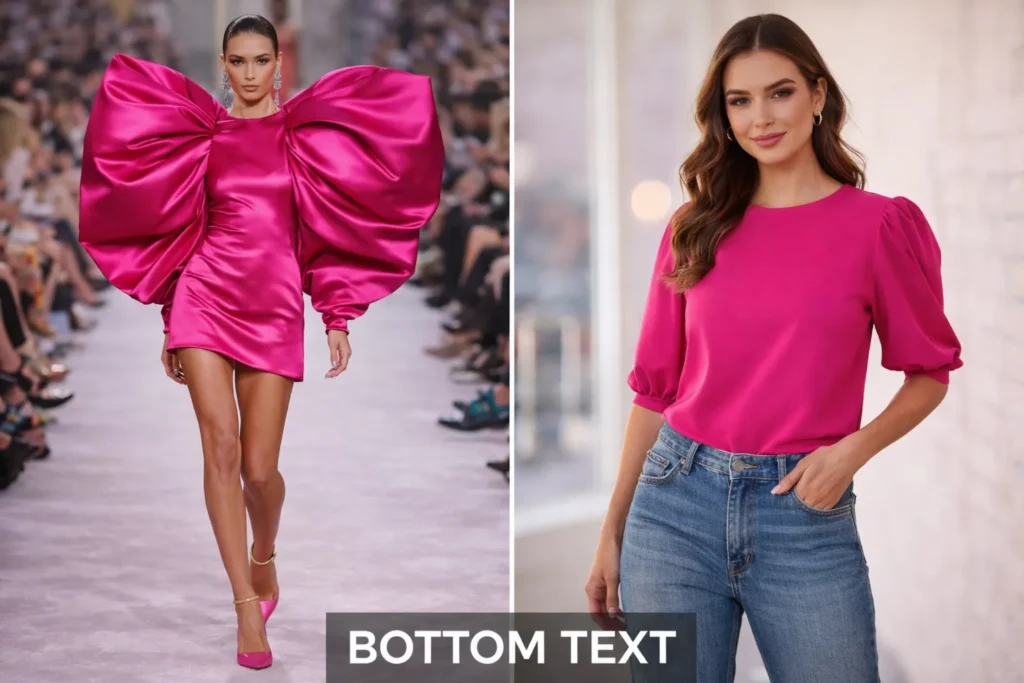
This is the crucial step: transformation. The goal is not replication but inspiration. Here’s your practical framework.
Step 1: Identify Your Personal Connection
When reviewing fashion week outfits, ask: “What here speaks to me?” Is it a specific color? A feeling of power from a strong shoulder? The romance of a ruffled sleeve? Ignore the outfit as a whole and latch onto the single element that sparks joy or curiosity.
Step 2: The “One Piece” Rule
The safest and most effective strategy is to incorporate one runway-inspired piece into your existing wardrobe. This anchors the trend and makes it feel like you.
- The Statement Piece: Let one bold, trend-driven item—a pair of wide-leg leather trousers, an intensely colored coat, a top with dramatic sleeves—be the focal point. Keep everything else classic: a simple white tee, a black turtleneck, well-cut jeans.
- The Accessory Route: This is low-commitment, high-impact adaptation. Invest in a bag, shoe, or jewelry style that mirrors the runway direction. A chunky chain necklace, a pair of toe-ring sandals, or an oddly-shaped mini bag can instantly modernize your look.
Step 3: Simplify the Silhouette
Take the runway shape and dilute it to a wearable level.
- Runway: Extremely oversized, deconstructed blazer drowning the model.
- Real Life: A blazer cut one size up from your usual, with strong shoulders but still showing your form. Pair it with slim-fit pants or a skirt to balance the volume.
Step 4: Democratize the Fabric & Color
Luxury fabrics can be interpreted in more accessible materials.
- Runway: A full look in chartreuse silk satin.
- Real Life: A chartreuse silk satin camisole under your blazer, or a skirt in a more affordable viscose blend with a similar drape and sheen.
Step 5: Focus on Vibe, Not Replication
Sometimes, it’s about capturing the attitude, not the items.
- Runway: A dark, romantic, gothic-inspired collection with lots of lace and velvet.
- Real Life: Incorporate the vibe with a black lace-trimmed cami, a velvet hair bow, and dark, moody nail polish with your everyday jeans and a leather jacket.
Building a Runway-Inspired Wardrobe: Core Pieces and Formulas
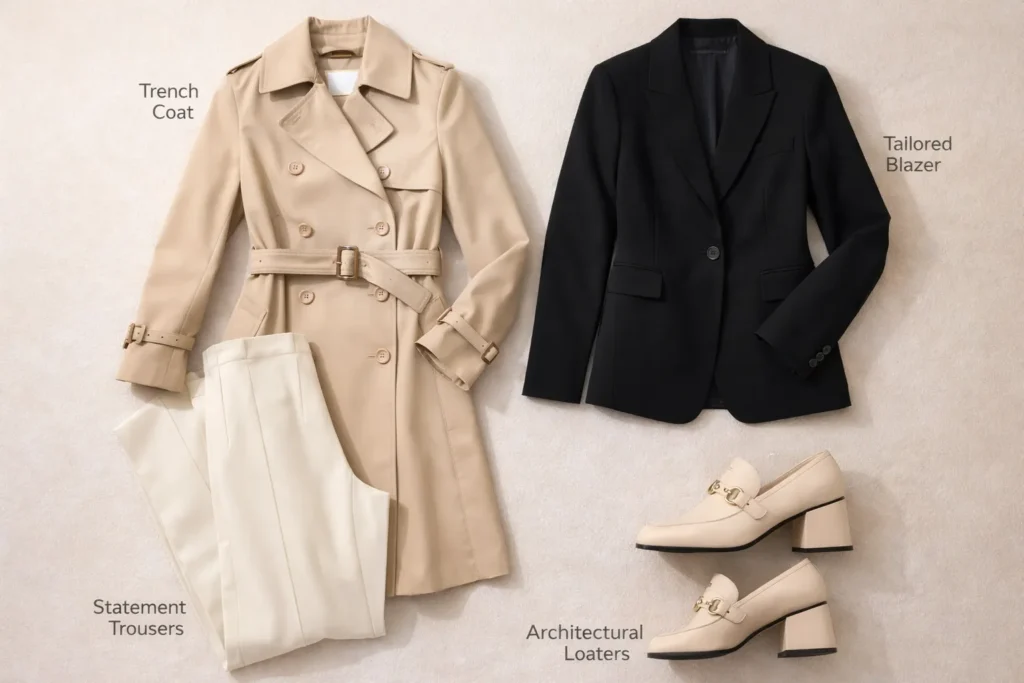
Let’s get practical. Here are key pieces often highlighted in fashion show outfits that are worth investing in, and formulas to style them.
The Investment Pieces (The “Runway” in Your Closet)
- The Perfect Trench Coat: A timeless piece that appears on runways in endless iterations—in bold colors, longer lengths, or with unique hardware. A classic beige one is endlessly adaptable.
- A Tailored Blazer with a Twist: Look for interesting proportions—a slightly cropped boxy fit, elongated sleeves, or a strong shoulder. It can elevate jeans and a tee instantly.
- Statement Trousers: This could be wide-leg pleated wool trousers, leather pants, or cargo pants with an interesting silhouette. They create an outfit foundation.
- The “Nothing” Dress: A simple, impeccably cut slip dress or shift dress in a great fabric. Like a canvas, it allows you to layer and accessorize per any runway trend.
- Architectural Footwear: Shoes are the quickest way to signal fashion awareness. A pair of distinctive loafers, chunky boots, or minimalist strappy sandals can transform an outfit.
Effortless Outfit Formulas
- Formula 1: The Elevated Basic
- Runway Inspiration: Celine, The Row.
- Your Outfit: A premium white t-shirt + high-waisted, wide-leg trousers + structured blazer + minimalist leather loafers.
- Why it Works: It focuses on cut, fabric, and proportion—the hallmarks of luxury runway style.
- Formula 2: Feminine Edge
- Runway Inspiration: Simone Rocha, Miu Miu.
- Your Outfit: A delicate pearl-embellished cardigan + classic blue denim jeans + chunky combat boots + a leather crossbody bag.
- Why it Works: It mixes traditionally feminine details with utilitarian, edgy pieces, a common runway contrast.
- Formula 3: Bold Color Blocking
- Runway Inspiration: Richard Quinn, Christopher John Rogers.
- Your Outfit: A vibrant cobalt blue skirt + a contrasting cherry red knit top + neutral beige trench coat and shoes.
- Why it Works: It adopts the runway’s love of color but grounds it with a neutral, making it wearable and striking.
Navigating Different Types of Fashion Shows
Not all runway looks are created equal. The adaptation strategy changes based on the type of show.
Haute Couture Shows
- Character: The pinnacle of craftsmanship, made-to-measure, one-of-a-kind art pieces.
- Adaptation Strategy: Look at the details, embroidery, and fabric techniques. The takeaway is about appreciation for luxury and perhaps incorporating a sense of extravagance through a single beautiful accessory or opting for custom alterations on your own clothes.
Ready-to-Wear (RTW) Shows
- Character: These are the commercial collections, the clothes that will be produced and sold in stores.
- Adaptation Strategy: This is your most direct source of inspiration. You can often find very similar versions of these outfits on the catwalk from the brand itself or high-street interpretations. Focus on the complete head-to-toe styling here.
Emerging Designer Shows
- Character: Experimental, raw, often where the most groundbreaking ideas are born.
- Adaptation Strategy: Look for the new silhouette or unconventional material. Support an emerging talent by buying a smaller item (a scarf, a hat). Embrace the “idea” of the trend—like asymmetry or upcycling—and find ways to interpret it.
Conclusion:
The world of fashion show outfits is not a remote spectacle meant only for the elite. It is a vibrant, ongoing conversation about creativity, identity, and culture. By learning to deconstruct the runway analyzing silhouette, color, texture, and detail you gain a powerful vocabulary for your own style. The key takeaway is selective inspiration. You don’t need to wear the outfit; you need to understand the principle behind it and translate that principle into your personal style language. Start by identifying one trend that resonates, incorporate it through a single piece or accessory, and build from there. Let the runway be a source of play, creativity, and confidence. Your personal fashion show happens every day, on the street that is your own catwalk.
Frequently Asked Questions (FAQs)
Q: How long does it take for fashion show outfits to become available in stores?
A: Typically, outfits from Ready-to-Wear (RTW) shows are available for purchase 4-6 months after the show. The Spring/Summer shows in September/October will stock in February/March, and Fall/Winter shows in February/March will stock in August/September. This is known as the “fashion calendar.”
Q: Are fashion show outfits only for models and celebrities?
A: Absolutely not. While the exact, often extreme, catwalk outfit is designed for impact, every element is meant to inspire broader trends. The styling, colors, silhouettes, and accessories are all filtered down into wearable pieces for everyone. High-street retailers are particularly adept at this translation.
Q: What’s the difference between a “look” and an “outfit” from a fashion show?
A: In runway terminology, a “look” refers to the complete head-to-toe ensemble presented on the model, including clothing, shoes, accessories, hair, and makeup. An “outfit” typically refers more specifically to the garments themselves. However, the terms are often used interchangeably in general discussion.
Q: How can I follow fashion shows if I can’t attend?
A: The digital age has made runways more accessible than ever! Most major fashion houses live-stream their shows on their websites or social media channels (Instagram, YouTube). Fashion media sites like Vogue Runway and Business of Fashion provide comprehensive photo galleries, reviews, and trend analysis immediately after each show.
Q: Is it worth investing in a direct copy of a runway piece?
A: This depends on the piece and your personal style. Consider: Is it a timeless silhouette (like a classic coat) or a very fleeting, gimmicky trend? Will it work with at least three other items in your wardrobe? Investing in direct, high-quality copies of iconic designer runway outfits can be worthwhile for foundational items. For super-trendy pieces, a more affordable interpretation might be the smarter choice.

Sofia Bennett is a fashion content creator known for her refined perspective on style, trends, and modern elegance. She specializes in curating content that blends timeless fashion principles with contemporary aesthetics, helping readers develop confidence through personal style. Sofia’s work spans outfit styling, wardrobe essentials, and fashion inspiration, always with an emphasis on authenticity and practicality. Her approachable voice and eye for detail make fashion accessible, empowering readers to express themselves with confidence and sophistication.




Бизнес выступает важным фактором роста экономики.
Оно формирует новые рабочие места и приносит людям стабильный доход.
https://typical-moscow.ru/oleg-belaj-o-znachenii-zelenoj-povestki-i-esg-strategii-v-ustojchivom-razvitii-trinfiko/
Помимо этого, предпринимательство поощряет нововведения и внедрение передовых решений.
Следовательно, бизнес делает экономику более благополучной и создаёт путь к успеху.
На этом сайте есть возможность обнаружить огромное количество интересных материалов.
На страницах ресурса размещены разнообразные тексты на интересные вопросы.
Любой посетитель сумеет почерпнуть что-то интересного и обогатить собственный багаж знаний.
Статьи регулярно пополняются, дабы пользователи неизменно располагали доступ к самой новейшей базе.
https://sakhaday.ru/news/psihologicheskiy-test-kakoe-slovo-vy-uvideli-pervym
На данном веб-сайте есть возможность почерпнуть массу увлекательных материалов.
Тут представлены самые разные обзоры на животрепещущие вопросы.
Всякий пользователь сумеет изучить немало полезного и пополнить собственный кругозор.
Статьи регулярно дополняются, дабы посетители неизменно располагали доступ к наиболее новейшей базе.
https://sakhaday.ru/news/kabachki-kak-gruzdi-po-vkusu-ne-otlichish-recept-zakrutki-na-zimu
Термоизоляция несёт ключевую роль в удержании тепла внутри помещения.
Качественная защита позволяет заметно снизить затраты на обогрев и кондиционирование зданий.
https://mpcclub.ru/item/2026-09-23-primenenie-mbo-v-promyshlennom-stroitelstve-keysy-i-rekomendatsii/
Кроме того, утепление защищает от появление влаги, грибка и промерзания стен.
Таким образом, грамотная изоляция обеспечивает энергоэффективность и комфортный микроклимат в здании.
Теплоизоляционные материалы играет ключевую роль в поддержании комфортной температуры внутри дома.
Эффективная защита помогает заметно снизить расходы на отопление и кондиционирование помещений.
https://blagort.ru/doc/1488.html
Помимо этого, теплоизоляция защищает от образование влаги, грибка и промерзания стен.
Таким образом, качественная изоляция гарантирует энергоэффективность и благоприятный микроклимат в доме.
Утепление выполняет ключевую функцию в поддержании тепла внутри здания.
Надёжная изоляция даёт возможность значительно сократить расходы на обогрев и охлаждение зданий.
https://mpcclub.ru/item/2026-09-23-primenenie-mbo-v-promyshlennom-stroitelstve-keysy-i-rekomendatsii/
Более того, теплоизоляция препятствует образование конденсата, грибка и разрушения стен.
Следовательно, качественная теплоизоляция создаёт энергоэффективность и комфортный микроклимат в доме.
На этом веб-сайте вы сможете найти полезную информацию.
https://nashipesni.ru/pub/2026-07-10-tragediya-pod-ekaterinburgom-rebyonok-ostavlen-umirat-v-luzhe-krovi/
На данном сайте есть шанс получить ценную информацию.
https://tltrock.ru/material/2026-07-15-posledstviya-atak-na-npz-i-put-k-vykhodu-iz-toplivnogo-krizisa.html
Kontrolované hraní znamená model, jenž klade si za cíl podržet sázení jako způsob zábavy, ne jakožto spouštěč závislosti.
Tento princip předpokládá stanovení vlastních limitů pro trávený čas a peníze, i identifikaci varovných příznaků rizikového chování.
http://forum.aionclassic.net/member.php?u=19263
Závěrem prosazuje vědomá rozhodnutí a napomáhá hráčům mít sebekontrolu nad svým hraním.
Cílem této koncepce je především ochránit psychické rovnováhu a finanční stabilitu každého uživatele.
Enjoying movies in a cinema is far better than streaming them at home.
The large display and immersive sound system provide a genuinely immersive atmosphere.
movies
Viewers can totally focus on the story free from notifications like phones.
Moreover, the communal experience of reacting with others makes the film more impactful.