
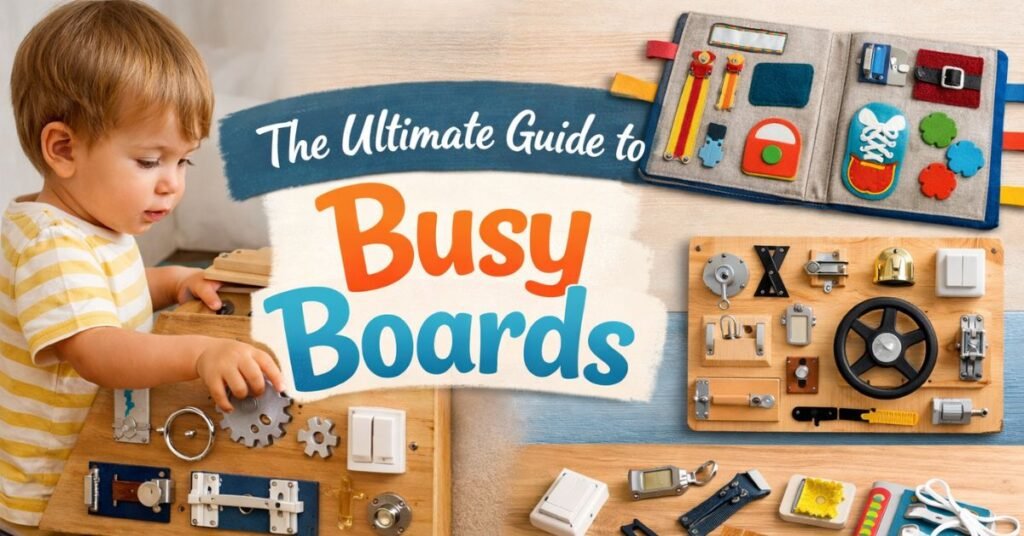
Busy Board: The Ultimate Guide for Parents, DIYers, and Early Learning Enthusiasts
If you’ve ever tried to cook dinner, answer an email, or simply sip a warm cup of tea while a curious toddler explores every forbidden drawer in your home, you already understand the magic behind a busy board. The humble busy board has quietly become one of the most trusted tools for keeping little hands engaged, little minds stimulated, and parents just a little more sane.
But here’s the truth most quick blog posts won’t tell you: a well-designed busy board isn’t just a distraction. It’s a powerful early-learning device rooted in sensory play, fine motor development, and real-world problem solving. When used intentionally, it can shape independence, confidence, and concentration in ways flashy electronic toys rarely achieve.
In this in-depth guide, we’ll explore everything you need to know about busy boards—from what they are and why they work to how to build one yourself, choose the best version for your child, avoid common mistakes, and use it as a meaningful learning tool rather than just another toy. By the end, you’ll feel confident creating or selecting a busy board that truly supports your child’s development while fitting seamlessly into your daily life.
What Is a Busy Board and Why Do Children Love It?
At its core, a busy board is a flat surface—usually wood or sturdy fabric—covered with interactive objects children can touch, move, open, twist, latch, zip, spin, and explore. Think of it as a safe, child-friendly version of all the “don’t touch that” items toddlers are naturally drawn to in the real world: door latches, light switches, zippers, knobs, buckles, and more.
The brilliance of a busy board lies in its simplicity. Instead of overwhelming a child with lights, sounds, and batteries, it offers tactile, hands-on discovery. Children learn through doing, not watching. When a toddler flips a latch or threads a buckle, their brain is building neural pathways connected to coordination, sequencing, and cause-and-effect reasoning.
From a developmental perspective, busy boards align beautifully with Montessori-inspired learning principles. They encourage:
- Independent exploration
- Real-world skill practice
- Concentration through repetition
- Sensory engagement without overstimulation
What makes children love them so much is that busy boards feel meaningful. These aren’t random plastic buttons—they’re real mechanisms that mimic adult environments. Toddlers feel capable when they master them, and that sense of “I did it myself” is incredibly powerful at this stage of growth.
Parents often notice something remarkable: a child who normally jumps from toy to toy may stay focused on a busy board for surprisingly long stretches. That sustained attention is a sign of deep, self-directed learning—the gold standard of early childhood development.
The Developmental Benefits of a Busy Board
A thoughtfully designed busy board supports far more than simple entertainment. It quietly nurtures several foundational skills that influence learning well into the school years. Understanding these benefits helps parents choose or create boards that truly matter rather than ones that simply look cute on social media.
Fine motor development is one of the most obvious gains. Every zipper pulled, button pushed, or knob twisted strengthens the small muscles in a child’s hands and fingers. These same muscles are later required for writing, drawing, cutting with scissors, and tying shoes. In other words, play today supports academic readiness tomorrow.
Cognitive growth happens simultaneously. Busy boards introduce sequencing (“first open the latch, then turn the knob”), problem solving (“why won’t this buckle click?”), and spatial awareness (“how does this piece rotate?”). These micro-challenges train the brain to persist through difficulty—an essential life skill.
Language development also benefits in subtle ways. When parents narrate play—“You opened the door!” or “That zipper goes up and down”—children absorb vocabulary connected to actions and objects. Over time, this builds comprehension and expressive language.
Emotional regulation is another overlooked advantage. Repetitive, hands-on tasks have a calming effect similar to adult activities like knitting or doodling. Many toddlers naturally return to busy boards when they feel overwhelmed, using the familiar motions to self-soothe.
Perhaps most meaningful of all is the development of independence. A child who can engage deeply with a busy board learns they don’t always need constant entertainment from adults. That quiet confidence becomes the foundation for curiosity, resilience, and self-directed learning.
Who Should Use a Busy Board and When to Start
Busy boards are most commonly associated with toddlers, but their usefulness spans a wider age range than many people expect. The key is matching complexity to developmental stage rather than age alone.
For babies around 6 to 12 months, soft fabric busy boards with textures, mirrors, and simple Velcro pieces provide gentle sensory exploration. At this stage, safety and simplicity matter more than variety.
Between 12 and 24 months, curiosity explodes. This is the golden window for classic wooden busy boards featuring latches, doors, spinning gears, and basic switches. Children at this age crave cause-and-effect learning and repetitive practice.
Toddlers aged 2 to 4 years benefit from more advanced features such as:
- Buckles and shoelaces for dressing skills
- Number or letter components for early literacy
- Simple puzzles or mazes for reasoning
- Clocks or rotating discs for concept learning
Even preschoolers can use themed busy boards tied to real-life routines—morning schedules, weather boards, or daily task panels. These expand the busy board from a toy into a learning system.
Busy boards are especially valuable for:
- Highly curious toddlers who explore everything
- Children needing fine motor support
- Kids who become overstimulated by electronic toys
- Travel situations where quiet engagement is helpful
- Parents seeking Montessori-style play at home
When chosen thoughtfully, a busy board grows with the child rather than becoming obsolete after a few months.
Types of Busy Boards You Can Choose From
Not all busy boards are created equal. Understanding the main categories helps you invest in something that fits your lifestyle, budget, and child’s interests.
Classic wooden busy boards are the most recognizable. These sturdy boards often include metal latches, doors, gears, and switches. They’re durable, tactile, and ideal for home use. Many parents love them for their natural aesthetic and long lifespan.
Soft fabric busy boards—sometimes called quiet books—are lightweight and portable. Made from felt or cloth, they include zippers, buttons, shapes, and textures. These are perfect for travel, car rides, or airplane entertainment because they’re silent and flexible.
Wall-mounted busy boards transform play into a permanent learning station. Often used in playrooms or classrooms, they allow multiple children to interact simultaneously and free up floor space.
Themed educational boards focus on specific skills such as:
- Alphabet and phonics
- Numbers and counting
- Daily routines
- Weather tracking
- Sensory textures
DIY busy boards deserve special mention because they allow full customization. Parents can tailor features to their child’s exact interests—whether that’s vehicles, animals, or household objects.
Each type has its place. The best choice depends on how and where you plan to use it, not simply what looks appealing online.
How to Make a DIY Busy Board Step by Step
Creating your own busy board is one of the most satisfying parenting projects you can take on. It combines creativity, practicality, and deep personalization—and often costs far less than store-bought versions.
Start by choosing a sturdy base. Smooth plywood, thick MDF, or solid wood panels work well. Sand all edges carefully to eliminate splinters, then seal the surface with child-safe paint or finish if desired.
Next comes the fun part: selecting interactive elements. Look around your home or hardware store for safe, interesting mechanisms such as:
- Door latches and slide bolts
- Cabinet handles and knobs
- Light switches (non-wired)
- Velcro strips and buckles
- Zippers and fabric flaps
- Small mirrors made from acrylic
- Spinning wheels or gears
Arrange the pieces before attaching anything. Think about spacing, reach, and progression from simple to complex. A well-planned layout encourages longer engagement.
Secure every item firmly using screws with covered backs or strong adhesive designed for wood. Safety is non-negotiable—nothing should loosen under pulling or twisting.
Finally, mount or stabilize the board. You can:
- Lean it against a wall
- Attach non-slip pads for floor use
- Mount it securely at toddler height
- Add handles for portability
A DIY busy board becomes more than a toy—it’s a handcrafted learning environment shaped by love and intention.
Best Tools, Materials, and Ready-Made Options
Whether you build or buy, quality matters. Poorly made busy boards can break, frustrate children, or even create safety risks.
For DIY projects, reliable materials include:
- Birch plywood for durability
- Stainless steel hardware to prevent rust
- Non-toxic paints and sealants
- Rounded screws or protective caps
- Strong wood glue for reinforcement
If purchasing ready-made boards, consider these factors:
Craftsmanship
Look for smooth edges, securely fastened parts, and solid construction. Cheap glue-only boards often fail quickly.
Skill variety
A good busy board mixes fine motor, sensory, and problem-solving elements rather than repeating the same action.
Age suitability
Check recommended age ranges, but also evaluate complexity yourself.
Portability
Foldable or fabric designs work best for travel.
Free vs. paid comparison is straightforward. DIY boards cost less and offer customization but require time and tools. Store-bought boards save effort and often look more polished but may lack personalization.
A balanced approach many parents love is buying a high-quality base board and adding custom elements later.
Common Busy Board Mistakes and How to Avoid Them
Even well-meaning parents sometimes create busy boards that miss the mark. Fortunately, these mistakes are easy to fix once you know what to watch for.
One frequent issue is overcrowding. Too many elements overwhelm toddlers and reduce focus. Simplicity almost always leads to deeper play.
Another mistake is choosing items that are too advanced. If a child can’t manipulate a feature after repeated attempts, frustration replaces curiosity. Start simple and increase complexity gradually.
Safety oversights can happen in DIY builds. Loose screws, sharp edges, or detachable small parts pose choking hazards. Always test the board with firm pulling and twisting before giving it to a child.
Some parents expect independent play immediately. In reality, children benefit from gentle introduction. Sit beside them, demonstrate actions, and narrate discoveries. Independence grows from connection first.
Finally, rotating or updating elements is often forgotten. Just like adults, children enjoy novelty. Swapping a few components every few months can renew excitement without replacing the entire board.
Creative Ways to Use a Busy Board Beyond Playtime
A busy board doesn’t have to live only in the playroom. With a little imagination, it can support daily routines and meaningful learning moments throughout the day.
Morning readiness boards can include brushing teeth steps, clothing fasteners, and simple clocks. These turn chaotic mornings into structured independence practice.
Travel busy boards become sanity savers on long car rides or flights. Quiet engagement reduces screen reliance and keeps hands occupied.
Emotional regulation corners can feature calming textures, spinning elements, or repetitive motions. Children naturally gravitate to these when overwhelmed.
Learning themes can evolve with age. You might introduce:
- Letter tracing paths
- Counting beads
- Shape matching doors
- Weather sliders
- Daily schedule wheels
Busy boards can even support special needs learning by offering sensory input, predictable interaction, and fine motor therapy in a playful format.
When used creatively, the busy board shifts from toy to everyday developmental companion.
Conclusion: Why Every Curious Toddler Benefits From a Busy Board
In a world overflowing with flashing screens and noisy plastic toys, the simple busy board stands out for a powerful reason—it respects how children truly learn. Through touch, repetition, curiosity, and real-world exploration, it builds skills that last far beyond toddlerhood.
Whether you craft one by hand, purchase a beautifully made version, or combine both approaches, the value lies in intentional design. A great busy board nurtures independence, strengthens motor skills, sparks problem solving, and offers calm focus in an otherwise busy childhood.
Most importantly, it creates quiet moments of meaningful play—the kind parents remember years later. If you’ve been searching for a toy that’s equal parts engaging, educational, and timeless, the busy board might be the most worthwhile addition to your child’s environment.
If you decide to make or buy one, start simple, stay safe, and let curiosity lead the way. And when your toddler proudly masters a tiny latch or zipper for the first time, you’ll see exactly why this humble board has earned such a beloved place in early childhood.
FAQs
What age is best for a busy board?
Most children benefit between 12 months and 4 years, though soft versions can be used earlier and themed boards later.
Are busy boards safe for toddlers?
Yes, when made with secure parts, smooth edges, and age-appropriate components under supervision.
Can I make a busy board without tools?
Simple fabric busy boards or adhesive-based designs require minimal tools and are beginner friendly.
Do busy boards replace other toys?
They complement rather than replace toys by focusing on skill development and independent play.
How long will a child stay interested?
With rotating elements and increasing complexity, a busy board can remain engaging for several years.