If you’ve ever stood in front of your closet before an important meeting wondering, “Is this too casual… or too stiff?” you’re not alone. Business formal is one of the most misunderstood dress codes in modern professional life. Some people imagine strict black suits and uncomfortable shoes. Others assume it’s outdated in a world of startups and hoodies. The truth sits somewhere in between—and understanding it can quietly transform how people perceive your professionalism, authority, and confidence.
In high-stakes moments—job interviews, executive meetings, court appearances, corporate presentations—what you wear communicates before you even speak. Business formal isn’t about fashion rules for the sake of rules. It’s about clarity, respect, and intentional presence. When done well, it removes distractions and lets your ideas take center stage.
This guide walks you through everything you need to know about business formal attire in the real world. You’ll learn what it truly means, when to use it, how to build outfits step-by-step, common mistakes to avoid, and smart tools that simplify the process. Whether you’re entering the workforce, moving into leadership, or simply refining your professional image, this article is designed to give you practical confidence—not just theory.
What Business Formal Really Means (and Why It Still Matters Today)
At its core, business formal is the most traditional and polished version of professional workplace attire. Think of it as the visual language of seriousness, credibility, and respect. Unlike business casual or smart casual—which allow personality to shine through—business formal prioritizes structure, simplicity, and timeless style.
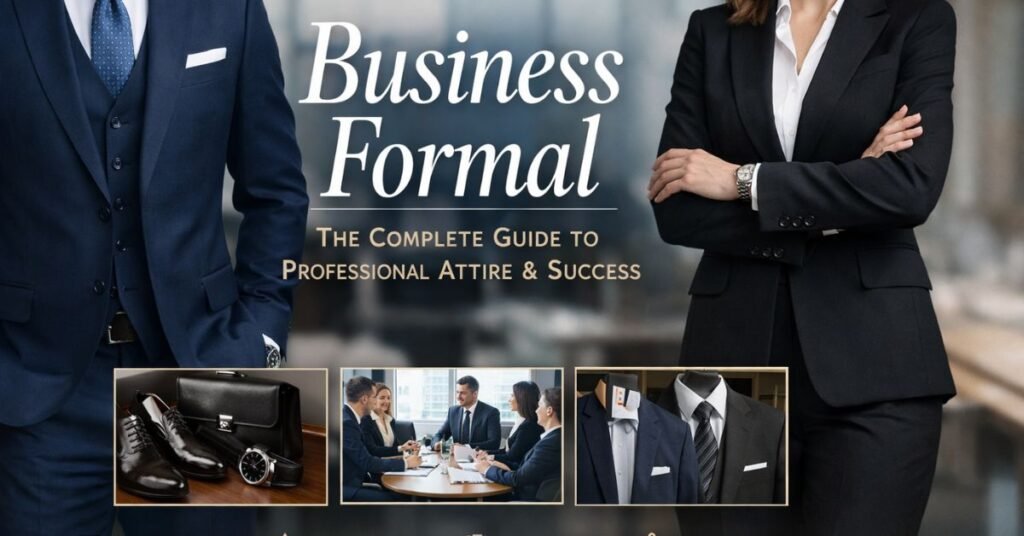
For men, this typically means:
- A well-tailored dark suit
- A pressed dress shirt
- Conservative tie
- Polished leather shoes
For women, business formal often includes:
- A tailored suit (pantsuit or skirt suit)
- A structured blouse or button-down
- Closed-toe professional shoes
- Minimal, elegant accessories
But definitions alone don’t explain why this dress code still matters in 2026. Workplaces may be more relaxed, yet formality hasn’t disappeared—it has become situational. The more important the moment, the more valuable business formal becomes.
Consider:
- Courtrooms still expect strict professional attire
- Finance and law maintain conservative dress standards
- Executive presentations benefit from visual authority
- Interviews often reward polished first impressions
Business formal functions like visual punctuation. It signals that the moment is significant and that you respect both the environment and the people in it.
And here’s the subtle truth many professionals discover late: dressing business formal doesn’t limit self-expression—it amplifies credibility. When clothing stops competing for attention, your voice, ideas, and leadership presence become clearer.
The Psychology and Professional Power Behind Business Formal
Clothing influences perception more than most people realize. Research in social psychology consistently shows that appearance shapes assumptions about competence, trustworthiness, and authority within seconds. Business formal works because it aligns with long-established cultural signals of professionalism.
But the power isn’t just external. It’s internal too.
Many professionals report:
- Increased confidence when wearing structured clothing
- Improved posture and body language
- Greater mental focus during important tasks
- Stronger sense of readiness for high-stakes situations
This phenomenon is often called enclothed cognition—the idea that what you wear affects how you think and perform.
Imagine two scenarios:
- Delivering a boardroom presentation in a wrinkled casual outfit
- Delivering the same presentation in a perfectly tailored suit
Your knowledge hasn’t changed. But your energy, posture, and audience perception absolutely have.
Business formal creates psychological alignment between:
- The importance of the moment
- Your internal confidence
- External professional expectations
That alignment is where real influence begins.
Who Should Wear Business Formal—and When It’s the Smart Choice
Not every workplace requires business formal daily. But knowing when to use it strategically is a career advantage many overlook.
High-impact professional situations
Business formal is most appropriate for:
- Job interviews (especially corporate roles)
- Client presentations
- Legal proceedings
- Financial services environments
- Executive-level meetings
- Formal ceremonies or conferences
In these moments, overdressing is rarely a problem. Underdressing often is.
Career transition moments
Business formal becomes especially valuable when:
- Moving into leadership
- Entering a new industry
- Meeting senior executives
- Representing your company publicly
It communicates readiness for responsibility before you say a word.
Cultural and regional expectations
Dress norms vary globally. Some regions embrace relaxed workwear, while others maintain traditional standards. When uncertain, business formal is the safest professional default—a neutral language understood everywhere.
Building a Business Formal Outfit Step-by-Step
Creating a polished business formal look isn’t about buying expensive clothing. It’s about fit, coordination, and intention. Let’s break the process down into practical steps.
Step 1: Start with tailoring, not trends
Fit matters more than brand names.
Look for:
- Clean shoulder alignment
- Sleeves ending at the wrist bone
- Pants or skirts with precise length
- Smooth drape without pulling or sagging
Even affordable clothing can look premium when tailored correctly.
Step 2: Choose timeless colors
Business formal favors restraint.
Best foundational colors:
- Black
- Navy
- Charcoal gray
- Crisp white
- Soft neutrals
These shades project authority and mix easily across outfits.
Step 3: Select structured fabrics
Wrinkle-resistant wool blends, quality cotton, and refined synthetics maintain shape throughout long workdays. Avoid overly shiny or thin materials that reduce formality.
Step 4: Keep accessories intentional
Less truly is more.
- Classic watch
- Minimal jewelry
- Simple belt matching shoes
- Professional bag or briefcase
Accessories should support—not distract from—your presence.
Step 5: Prioritize grooming and finishing details
Even perfect clothing fails without:
- Pressed garments
- Clean, polished shoes
- Neat hair
- Subtle fragrance
Business formal is ultimately about precision.
Essential Wardrobe Pieces Worth Investing In
A strong business formal wardrobe doesn’t require dozens of outfits. A small, high-quality capsule often works better.
For men
Core essentials include:
- Two dark suits (navy and charcoal)
- Five dress shirts in neutral tones
- Three conservative ties
- One pair black leather shoes
- One pair dark brown leather shoes
- Quality belt and watch
With these pieces alone, you can create multiple professional combinations.
For women
Smart foundational items:
- Tailored pantsuit and skirt suit
- Neutral blouses or shirts
- Closed-toe pumps or flats
- Structured professional bag
- Subtle jewelry pieces
The goal is versatility with polish—not excess.
Tools, Brands, and Smart Buying Strategies
Shopping for business formal can feel overwhelming, especially when balancing budget and quality. The key is strategic investment.
Affordable yet reliable options
Many mid-range brands now offer:
- Machine-washable suiting
- Stretch comfort fabrics
- Inclusive sizing
- Modern tailoring
These provide strong value for early-career professionals.
Premium investment pieces
Higher-end garments often deliver:
- Superior fabric longevity
- Better drape and structure
- Precise stitching
- Long-term cost efficiency
A single excellent suit can outperform several cheap ones over time.
Tailoring as the ultimate upgrade
If you remember only one rule, make it this:
Tailoring beats price.
Even modest clothing looks executive-level when perfectly fitted.
Common Business Formal Mistakes (and How to Fix Them Fast)
Many professionals unintentionally weaken their appearance through small errors.
Poor fit
Fix: Visit a tailor. This single step elevates everything.
Over-accessorizing
Fix: Remove one item before leaving home.
Wrinkled clothing
Fix: Steam or press garments the night before.
Outdated styles
Fix: Choose classic cuts instead of trend-driven designs.
Ignoring shoes
Fix: Keep leather clean, polished, and well-maintained.
Small corrections create major perception shifts.
Adapting Business Formal for Modern Work Culture
Workplaces evolve, but professional signals remain relevant. Today’s business formal is slightly more flexible than decades past.
Modern updates include:
- Softer tailoring
- Comfortable stretch fabrics
- Subtle personal touches
- Gender-neutral styling options
The goal is balance: traditional credibility with contemporary comfort.
Business Formal vs. Business Casual: Knowing the Difference
Confusion between dress codes causes frequent missteps.
Business formal emphasizes:
- Suits
- Dark colors
- Minimal accessories
- Maximum polish
Business casual allows:
- Blazers without full suits
- Loafers or flats
- Patterned shirts
- Greater color variety
When unsure, lean formal—then adjust later.
Conclusion: Why Mastering Business Formal Is a Quiet Career Advantage
Business formal isn’t about rigid rules or outdated tradition. It’s about clarity, confidence, and respect for meaningful moments. In a world where many professionals dress down, the ability to dress up appropriately becomes a powerful differentiator.
You don’t need an expensive wardrobe or fashion expertise. You only need:
- Proper fit
- Timeless colors
- Clean presentation
- Intentional simplicity
Master those, and business formal becomes effortless.
And here’s the deeper truth: when your appearance communicates professionalism automatically, you gain mental freedom to focus on what truly matters—your ideas, leadership, and impact.
If you’re building your professional future, refining your business formal style may be one of the simplest upgrades with the biggest long-term return.
FAQs
What is considered business formal attire?
Business formal typically includes dark tailored suits, dress shirts or blouses, conservative shoes, and minimal accessories designed for highly professional environments.
Is a blazer enough for business formal?
Usually not. Business formal generally requires a full matching suit, not just a blazer with separate pants.
Can women wear pants in business formal settings?
Yes. Tailored pantsuits are fully appropriate and widely accepted in modern professional environments.
Are black suits always required?
No. Navy and charcoal gray are equally professional and sometimes more versatile.
Is business formal still relevant today?
Absolutely. While daily office wear may be casual, high-stakes professional situations still rely on business formal standards.