
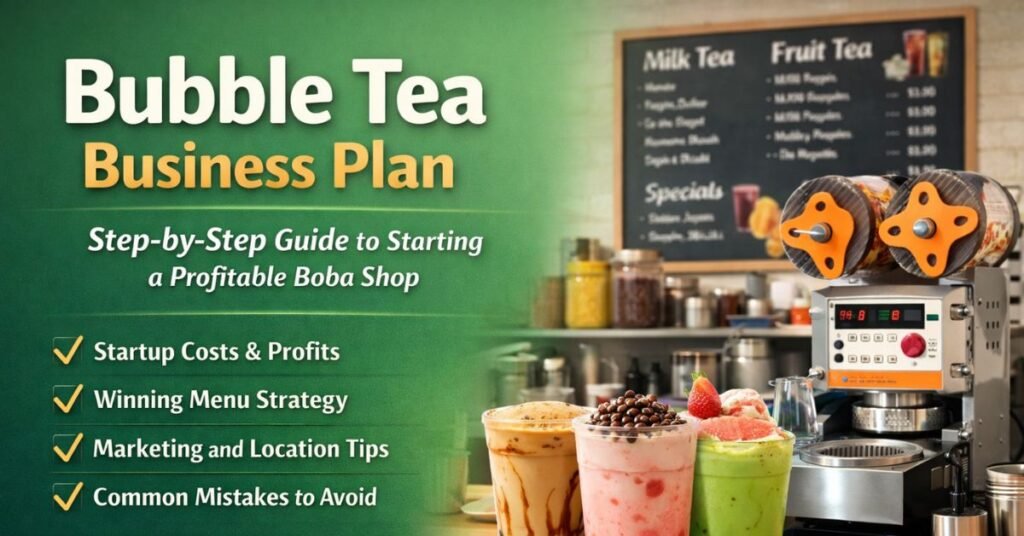
If you’ve ever stood in a long line waiting for a creamy brown sugar milk tea or a fruit-packed popping boba drink, you’ve probably wondered one simple thing: could I start a bubble tea shop of my own?
The truth is, a strong bubble tea business plan is the difference between a trendy idea that fades in months and a thriving café that becomes a neighborhood favorite. Bubble tea isn’t just a drink anymore—it’s a lifestyle product, a social media magnet, and a fast-growing global market worth billions.
In this in-depth guide, you’ll learn everything needed to build a profitable, realistic, and investor-ready bubble tea business plan. We’ll cover startup costs, equipment, menu design, location strategy, marketing, real-world mistakes, and practical tools that experienced café owners actually use. Whether you’re dreaming of a small takeaway kiosk or a full-scale boba lounge, this guide will walk you through the process step by step in clear, human language.
By the end, you won’t just understand the theory—you’ll have the confidence to start.
What a Bubble Tea Business Plan Really Means (Beginner-Friendly Explanation)

At its core, a bubble tea business plan is a roadmap. Think of it like Google Maps for your café dream. Without it, you may still start driving—but you’ll waste time, money, and energy making wrong turns.
A proper plan explains:
- What you’re selling
- Who you’re selling to
- How much it will cost
- How you’ll earn profit
- How you’ll grow over time
Many first-time entrepreneurs assume a business plan is only for investors or bank loans. In reality, it’s more like a survival guide. Bubble tea shops often fail not because the drinks are bad, but because pricing, rent, staffing, or marketing weren’t planned properly.
Imagine opening in a high-rent mall with low daily foot traffic, or setting drink prices too low to cover ingredients. These are planning mistakes, not drink mistakes.
A strong bubble tea business plan removes guesswork. It turns excitement into strategy and helps you see problems before they cost real money.
Why Bubble Tea Is One of the Most Attractive Small Food Businesses Today
Bubble tea has quietly become one of the most scalable beverage businesses in the world. Compared with restaurants, it requires:
- Smaller kitchen space
- Simpler cooking process
- Lower ingredient cost
- Faster service time
- Strong takeaway and delivery demand
That combination makes it ideal for new entrepreneurs.
Another major advantage is customization. Customers love choosing sweetness level, ice level, toppings, and flavors. This personalization creates emotional attachment and repeat visits—something traditional cafés struggle to achieve.
Social media also plays a huge role. Colorful drinks, layered milk teas, and aesthetic cups generate free marketing on TikTok and Instagram. One viral post can bring hundreds of new customers without spending on ads.
Most importantly, profit margins on bubble tea can be high when managed well. A drink that costs less than a dollar in ingredients may sell for four to six dollars depending on location.
That gap between cost and selling price is where smart planning turns into real income.
Real-World Benefits of Creating a Detailed Bubble Tea Business Plan
Some entrepreneurs try to skip planning and “figure it out later.” Experienced café owners almost always regret that decision.
A detailed plan provides clarity in several powerful ways.
First, it reveals the true startup cost. Many beginners underestimate expenses like renovations, permits, and equipment installation. Planning prevents financial shock halfway through opening.
Second, it helps you price drinks correctly. Without cost calculations, owners either overprice and lose customers or underprice and lose profit. A plan balances both.
Third, it improves funding chances. Banks and investors rarely support businesses without structured projections. A clear bubble tea business plan signals professionalism and reduces perceived risk.
Fourth, it guides daily operations. Hiring staff, ordering supplies, scheduling shifts, and tracking sales all become easier when the foundation is documented.
Finally, it supports long-term growth. Expanding to multiple locations, franchising, or adding new menu categories becomes possible only when the original system is organized.
In short, planning doesn’t slow you down—it protects your future.
Step-by-Step Guide to Writing a Winning Bubble Tea Business Plan
This is where dreams become structure. Below is the real framework used by successful beverage startups.
Step 1: Define Your Concept and Brand Identity
Before thinking about money, define your story.
Ask yourself:
- Will your shop feel modern, cozy, luxury, or youth-focused?
- Are you targeting students, families, office workers, or tourists?
- Will you specialize in classic milk tea, fruit tea, or creative signature drinks?
Your answers shape everything from logo design to menu pricing.
For example, a minimalist Korean-style café may charge premium prices with fewer menu items. A student-focused takeaway kiosk may offer budget combos and fast service.
Clarity at this stage prevents confusion later.
Step 2: Research Your Local Market Deeply
Never assume demand—verify it.
Walk through potential locations at different times of day. Count foot traffic. Observe competitors. Check delivery app popularity. Talk to nearby shop owners.
Key questions to answer:
- How many bubble tea shops already exist?
- What are their prices and best-selling drinks?
- Are customers mostly teenagers, young adults, or families?
- Is there space for a unique concept?
Real-world observation is more valuable than online research. Spend time in the area. Patterns will appear.
Step 3: Plan Your Menu Strategically
A common beginner mistake is offering too many drinks.
A smarter approach is:
- 6–8 core milk teas
- 4–6 fruit teas
- 3–5 signature specials
- 5 topping options
This keeps inventory manageable and speeds up service.
Also calculate exact ingredient cost per drink. This determines your pricing and profit margin. Small miscalculations multiplied by hundreds of cups per day can destroy profit.
Step 4: Estimate Startup Costs and Funding Needs
Typical bubble tea startup costs include:
- Rent deposit and renovation
- Tea brewers, sealing machine, refrigerator, shaker
- Initial ingredients and packaging
- Licenses and permits
- Marketing launch budget
- Staff training wages
Costs vary by country and location, but planning every category prevents surprises.
Then decide funding source:
- Personal savings
- Family investment
- Bank loan
- Business partner
Choose the safest option for your financial situation.
Step 5: Create Revenue and Profit Projections
This is where your plan becomes realistic.
Estimate:
- Average cups sold per day
- Average price per cup
- Monthly revenue
- Ingredient and labor costs
- Net profit
Be conservative. Over-optimistic projections are the most common planning error.
Step 6: Build a Marketing and Growth Strategy
Opening day excitement fades quickly without marketing.
Strong bubble tea shops focus on:
- Social media content
- Influencer tastings
- Loyalty cards or apps
- Seasonal limited drinks
- Student discounts
- Delivery platform promotions
Marketing should be continuous, not just during launch.
Essential Tools, Equipment, and Software for Bubble Tea Shops
Running a modern bubble tea business requires more than tea leaves and cups. Smart tools improve speed, consistency, and profit tracking.
Core Equipment Every Shop Needs
- Automatic tea brewer for consistent flavor
- Cup sealing machine for professional presentation
- Commercial refrigerator for milk and fruit storage
- Shakers and measuring tools for recipe accuracy
- POS system for billing and sales analytics
Buying high-quality equipment reduces breakdowns and saves money long term.
Free vs. Paid Business Tools
Free tools:
- Basic accounting spreadsheets
- Social media scheduling apps
- Free logo design platforms
Paid tools:
- Advanced POS systems with inventory tracking
- Professional branding design
- Delivery platform integrations
- Paid social media ads
Free tools work at the beginning, but scaling usually requires paid systems.
Choosing Between Franchise and Independent Shop
Franchise advantages:
- Recognized brand
- Proven recipes
- Training support
- Easier marketing
Independent advantages:
- Full creative control
- No royalty fees
- Flexible pricing
- Unique brand identity
Your choice depends on budget, risk tolerance, and long-term vision.
Common Bubble Tea Business Mistakes and How to Avoid Them
Even passionate owners can fail if they ignore key realities. Here are the most frequent problems seen in real cafés.
Choosing the Wrong Location
A beautiful shop in a low-traffic area rarely survives. Prioritize visibility and daily footfall over cheap rent.
Underpricing Drinks
Many beginners fear charging too much. But prices must cover rent, labor, ingredients, and profit. Study competitors and calculate carefully.
Poor Staff Training
Inconsistent taste drives customers away quickly. Standardized recipes and proper training are essential.
Ignoring Marketing After Opening
“No customers” is usually a marketing problem, not a drink problem. Continuous promotion is necessary.
Expanding Too Fast
Opening multiple branches without stable profit from the first location often leads to financial collapse. Grow slowly and strategically.
Conclusion: Turning a Bubble Tea Dream Into a Sustainable Business
Starting a bubble tea shop is exciting because it blends creativity, community, and real earning potential. But success doesn’t come from colorful drinks alone—it comes from planning, discipline, and smart decision-making.
A thoughtful bubble tea business plan gives you clarity before spending money, confidence when facing challenges, and direction as you grow. It transforms a risky idea into a structured opportunity.
If you’re serious about entering the bubble tea industry, begin with planning, not purchasing equipment. Study your market, calculate real costs, test your menu, and build a brand people remember.
Your future café customers are already out there waiting. The next step is yours.
FAQs
How much money is needed to start a bubble tea shop?
Startup costs vary widely by country and location, but small kiosks may start around a few thousand dollars, while full cafés can require tens of thousands. Accurate local research is essential.
Is a bubble tea business profitable?
Yes, when managed correctly. Ingredient costs are relatively low compared to selling price, creating strong potential margins. Profit depends on location, pricing, and daily sales volume.
Do I need experience to open a bubble tea shop?
Formal experience isn’t required, but training in drink preparation, customer service, and business management greatly improves success chances.
Should I start a franchise or my own brand?
Franchises offer support and recognition but include fees. Independent shops allow full control and higher long-term profit potential. The best choice depends on your goals and budget.
How long does it take to break even?
Many bubble tea shops aim to recover startup costs within 6–18 months, depending on sales performance and expenses.